
Introduction
A pair of socks may look simple, but from design confirmation to knitting and shipment, the process involves multiple connected steps. Whether you are sourcing sports socks in bulk or launching private label socks for a seasonal apparel line, understanding the manufacturing process can help you assess a supplier's capabilities, negotiate pricing, and make better sourcing decisions.
This guide walks through the main stages of sock production from development to shipment from a manufacturing perspective. It also explains the differences in how various types of socks are made, and how to work more efficiently with your manufacturer.

The Manufacturing Process from Yarn to Finished Socks
Step 1: Product Planning and Confirmation
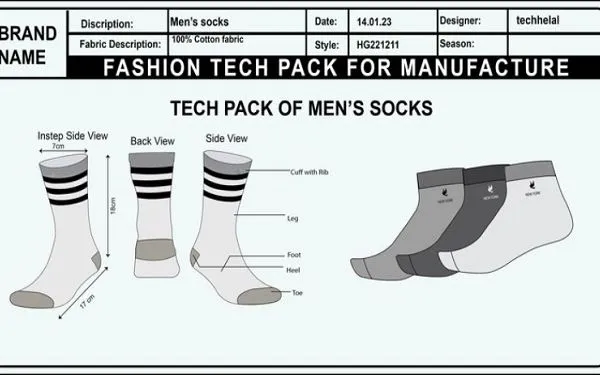
Sock manufacturing starts with defining your product requirements. At this stage, the factory will first confirm with the customer about the sock type, brand positioning, pattern style, main and secondary colors, size range, and packaging direction. For example, even within sports socks, basketball, running, and ski socks differ in leg length, thickness, cushioning areas, and support needs.
Buyers can provide design sketches, reference images, existing samples, or design files in formats such as JPEG, PNG, PSD, and AI. The clearer the information, the smoother the later steps will be, including pattern programming, yarn color matching, and sample development. It also allows the manufacturer to provide process suggestions and quotations more quickly.

Step 2: Pattern Programming and Design Conversion
The knitting machine runs based on a program, not directly on the document. Before sampling, we first convert the customer's design into a bitmap. That is, creating machine-executable program code based on the sock machine gauge, sock structure, and color setup.
Different machine gauges directly affect the horizontal resolution of the pattern. For example, 96N, 144N, 168N, and 200N machines correspond to different pixel counts. The higher the gauge, the finer the pattern usually appears. This is also why socks can be more challenging when it comes to gradients, photo-like images, or very small, detailed text.

Step 3: Yarn Selection and Preparation
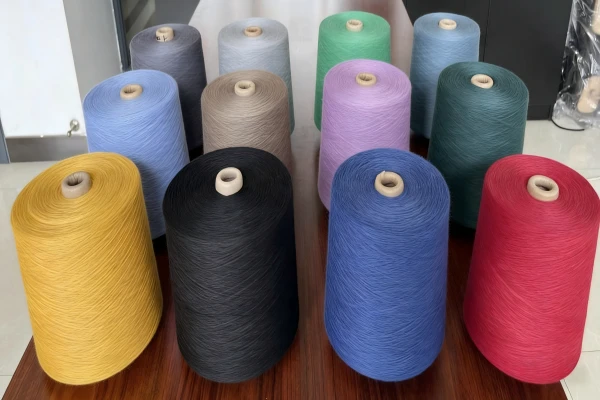
Next, the manufacturer prepares the yarns used for sock knitting. Common materials include regular cotton, combed cotton, nylon, spandex, wool, and blended yarns.
For custom sock projects, we often use "dyed yarn knitting", which means the yarn colors are knitted directly into the sock structure. This method is especially suitable for multi-color jacquard patterns and brand logos. Once the yarn is confirmed, workers carry out winding, tension adjustment, and basic yarn feeding checks to prevent later knitting problems caused by uneven yarn thickness, tension variation, or color difference.

Step 4: Sample Development and Adjustment
Samples serve to verify whether the sock patterns, sizes, colors, and structural specifications designated by the buyer are appropriate. During this stage, a small batch of samples is qualified by buyers and further modified as necessary. This ensures a lower risk of deviations that typically occur during subsequent mass production.

Step 5: Sock Knitting
Once the sample and program are confirmed, the factory moves into formal knitting. We feed the yarn into computer-controlled circular sock knitting machines according to the preset program, gradually forming the sock leg, instep, sole, heel, and cuff. At FutureStitch, we use more than 300 high-end Lonati knitting machines from Italy to produce high-quality seamless socks in large volumes.
Some functional features commonly found in sports socks, including terry cushioning, breathable mesh, arch support, and compression zones, are also knitted directly at this stage. During production, we also carry out the first in-line inspection to identify issues such as abnormal length, pattern misalignment, dropped stitches, yarn breakage, or incorrect stitch structure in time.

Step 6: Toe Closing
This process closes the loops at the toe opening, so the sock can be worn properly while maintaining the basic shape and strength of the toe area. Common closing methods mainly include:
• Hand Linking: flatter seam, but higher cost and lower output.
• Machine Linking: fast and durable, suitable for most standard orders.
• Rosso Linking: lower cost and often used for basic styles and large-volume projects, but with a more visible seam.
It should be noted that the toe closing method directly affects the flatness and wearing comfort of the toe area. For high-end products, FutureStitch recommends considering Kitchener linking, as it creates a less visible seam. During production, our experienced workers can also remove defective pieces as the second quality check.

Step 7: Boarding, Shaping, and Finishing
Next, the socks go through boarding, shaping, and basic finishing. Workers place the socks onto size-specific boarding forms or molds, then use steam and controlled heat to set the shape. This step helps improve the overall appearance of the socks, making the surface smoother and the heel and leg sections more defined.
At this stage, we also carry out thread trimming, appearance touch-up, and basic cleaning. For the custom socks, the embroidered logos or decorative details are also added during the finishing stage.

Step 8: Quality Inspection and Pairing
To keep quality consistent across different production batches, the socks must go through a final quality inspection and pair matching before packaging. Common inspection points include size, color, pattern placement, knitting defects, loose threads, stains, stretch recovery, and left-right or pair matching.
In fact, FutureStitch sets multiple in-line inspection points during knitting, toe closing, and boarding to help speed up delivery, especially for wholesale orders and rush orders.

Step 9: Packaging and Labeling
After pairing, the socks are first sorted, folded, arranged, and packed according to the order requirements. Common packaging methods include hang tags, belly bands, individual poly bags, barcode stickers, size stickers, or retail header cards. If the order includes multiple patterns, sizes, or packaging combinations, different packaging materials, colors, or labels can be used for clear product grouping.

Step 10: Carton Packing and Shipment
At FutureStitch, we check the order details against the actual packing data again before carton packing to make sure the quantity, specifications, and labels are correct before shipment. For export orders and mixed-size orders, proper carton packing, clear SKU identification, and accurate outer carton labels can help improve receiving, storage, and later distribution efficiency.
How the Manufacturing Process Differs by Sock Type
While the basic sock manufacturing process is generally similar, different sock types can vary in material setup, pattern handling, knitting focus, and inspection standards. For example:
- Socks for Men
- Women's Socks
- Socks of the Children
- Sports Socks

In addition, many of these styles come in dark solid colors or simple patterns, so issues such as color variation, loose yarns, and uneven knitting tend to stand out more clearly. This requires factories to keep tight control over yarn batches, machine tension, and finishing processes.


What Drives Sock Manufacturing Cost, Quality, and Lead Time?
For buyers, the best way to compare quotes is not to look at unit price alone. It is more useful to understand the
material level, the manufacturing complexity, and the delivery risk behind each offer.


How to Work More Efficiently on a Sock Project
We recommend that buyers provide complete order information at the early stage, including the sock type, size, artwork, packaging requirements, and estimated order quantity. This allows suppliers to provide design proposals and quotations that are closer to actual needs as early as possible.
During sample evaluation, buyers can focus on size, stretch, embroidery clarity, and overall workmanship. A more complete review at this stage helps reduce repeated changes before bulk production and saves time.
After that, the factory can move more efficiently into pattern programming, yarn preparation, sample making, and production scheduling.

Conclusion
From product planning and yarn preparation to knitting, toe closing, shaping, inspection, and packaging, each stage takes a project forward. As this guide shows, understanding the process can help buyers communicate more clearly with suppliers, review samples more effectively, and make better sourcing decisions. If you are currently looking for a manufacturing partner for your brand, FutureStitch's private label program may also be worth exploring.
Frequently Asked Questions for Buyers
-
How long does it take to produce socks?Most socks take around 3 to 15 minutes to knit. At FutureStitch, sample development takes only 10 to 15 days from yarn preparation to finished packaging.
-
How's the quality of your socks?All sock production is carried out in facilities that follow the ISO 9001 quality management system and are audited against SA8000 and RWS standards.
-
What is the minimum order quantity for private label sock production?Our private label sock production starts at 2,000 pairs per SKU, with two standard sizes included.
-
Do you provide samples?Yes. We can provide up to five free samples for review before bulk production. Shipping costs are on your side and may be deducted in bulk orders.
-
How long will it take to receive my athletic socks?Once a wholesale order is approved, production is usually completed within 60 to 90 days. Rush production can also be arranged when needed.
-
How do you ship overseas orders?We handle worldwide shipping. Standard orders are offered on FOB terms, while large-volume projects can be arranged with DDP door-to-door delivery.

One-stop Sock Solutions.
With over 15 years of experience in sock development and manufacturing, FutureStitch has successfully delivered numerous OEM and ODM projects for global brands. If you're looking for a reliable and innovative manufacturing partner, we're here to help.
- Development advice
- Free samples available
- Own IP library for reference
- Flexible MOQ
Start Your Custom Project Now
Contact our team, and we'll get back to you with a detailed quote within 24 hours.