
Introduction
According to the latest report by Global Market Insights Inc., the global socks market is expected to grow from USD 26.2 billion in 2026 to USD 49.4 billion by 2035, with a compound annual growth rate of 7.3%. In this market, custom socks are becoming a popular tool for sports brands, apparel companies, corporate promotions, and marketing campaigns to express brand individuality while also offering higher profit margins.
However, how can buyers find a reliable custom socks supplier and avoid issues such as inconsistent product quality, production delays, and poor communication to ensure fast product development and market launch? As a premium sock manufacturer with over 16 years of experience in the sock industry, FutureStitch provides a practical framework to help you quickly select a reliable manufacturing partner and reduce sourcing risks and trial-and-error costs. Let's dive in!

Define Your Requirements Before Contacting a Supplier
A clear proposal helps manufacturers provide accurate quotes and reduces misunderstandings during the development process. Before contacting any custom sock supplier, we recommend that buyers prepare a basic project brief. This brief should include the following details:
- Target Market
- Sock Types
- Material Selection
- Customization Requirements
- Order Quantity & Budget Range


• Cotton: Soft and moisture-wicking; suitable for everyday wear.
• Merino Wool: Offers natural temperature regulation and moisture control, popular for winter socks and ski socks.
• Blends (Nylon, Polyester): Provide superior elasticity and quick-drying properties; highly suitable for athletic use.
• Bamboo: Ultra-soft and absorbs about 60% more moisture than cotton, but less durable and more prone to stretching and holes.


Where to Find Reliable Custom Socks Manufacturers
Once the specific requirements for custom socks have been clearly defined, the next step is to identify potential suppliers. Most buyers utilize a combination of channels rather than relying on a single source. The following are some viable approaches:

B2B Trade Platforms
These include trade platforms such as Alibaba (featuring Trade Assurance), Thomasnet (U.S. industrial suppliers), Global Sources (verified Asian suppliers), and Made-in-China.com (specialized manufacturing). Prioritize certified suppliers with over five years of experience, positive reviews, and Trade Assurance coverage. Buyers can filter for "certified manufacturers," request samples, and verify factory locations via maps.
Industry Directories and Trade Catalogs
Manufacturers that are certified and possess the requisite production capabilities and credentials are frequently listed in specialized industry directories and procurement databases. For instance, on Thomasnet.com, you can discover a vast array of high-quality apparel suppliers based in the United States. Additionally, tools such as ImportGenius and Panjiva allow you to verify which companies a supplier is currently working with.


Social Media and Brand Showcases
On social media platforms, including LinkedIn, Instagram, and TikTok, you can utilize industry-specific hashtags (e.g., #CustomSocks, #SockManufacturer) to locate authentic videos of manufacturing facilities. While these platforms may not serve as primary procurement channels, they offer a visual window into a supplier's new product designs, actual production examples, and their engagement with the audience.
Industry Referrals
By attending trade shows and industry-specific events, sock buyers can engage in face-to-face interactions with manufacturers, inspect product samples, and exchange contact information directly. If you are too busy to do that, you may also reach out to local chambers of commerce or economic development boards, as they typically maintain databases of local manufacturers.

Key Considerations When Choosing Custom Sock Manufacturers
Once you have narrowed down your list of potential suppliers, you need to evaluate the factory's capabilities, including:
-
Company Location
-
Material Selection and Yarn Quality
-
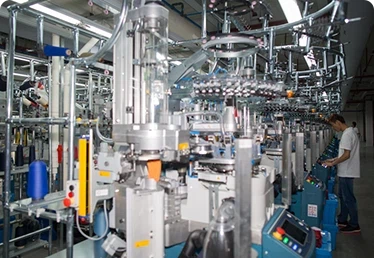
Manufacturing Capacity and Equipment
-
Customization Capabilities
-
Quality Control and Sampling
-
MOQ and Scalability
-
Communication Efficiency and Response Speed


Needle count also affects sock structure. Higher-gauge machines (168N–200N) produce finer yarns, which are suitable for detailed patterns and fashion socks. Lower gauge machines (72N–144N) produce thicker fabrics, which are better suited for sports or functional socks.


You'd better check the elasticity, thickness, and other characteristics of socks through samples before placing an official order. Usually, the factory will also allow one or two revisions of the design draft in the proofing stage.


Main Steps to Verify Your Supplier in Practice
Before making a final decision, the goal is to confirm how the supplier's claims match what they can deliver in practice.
-
 Cross-check Basic Company Details
Start by making sure the supplier's basic information is consistent across multiple sources, such as their website, B2B platforms, and email signatures. If the company name, address, or contact details don't fully match, it's usually a signal to slow down and double-check.
-
 Look for Real Production Activity
A reliable manufacturer should offer visible, ongoing evidence for production, not just product photos. This can include recent order cases, workshop photos, or updates from current projects.
-
 Check Sock Sample Consistency
Samples are not only about quality, but also about stability. Compare different samples and note whether the socks' embroidery clarity, elasticity, knitting density, and wash performance stay consistent. Noticeable variation is often a sign of unstable production control.
-
 Run a Small Trial Project
Before scaling up, many buyers prefer to run a small real project. Provide a complete design brief and see how the supplier responds. Through this, you can see how they explain pricing, handle technical details, and whether the revisions comply with their feedback.
How to Make the Final Decision and Start Cooperation
At the final stage, buyers usually choose between 2–3 suppliers. The decision is based on three things: sample consistency across batches, price stability, and reliability in communication and delivery.
Before confirming, lock all details in a tech pack, including Pantone colors, material ratio, sizing, and packaging. Then include everything in the contract: price, lead time, payment terms (e.g., 30% deposit, 70% before shipment), and defect handling. Finally, approve a golden sample as the production standard. Mass production must strictly follow it to avoid later changes.

Conclusion
A structured evaluation process covering requirements, sampling, capability checks, and final validation helps us to select a trusted custom socks manufacturer. When these elements are controlled early, most sourcing risks can be avoided, and production becomes more predictable.
Why Choose FutureStitch as Your Custom Socks Factory


Our end-to-end customization includes yarn and material selection, knitting development, packaging, and quality control. And we operate LEED Platinum-certified sustainable facilities and have experience producing for leading global brands such as New Balance, Stance, Crocs, and Under Armour.
Custom Sock Solutions Tailored for Your Brand
Get in touch with us, share your requirements, and turn your ideas into production-ready products today.